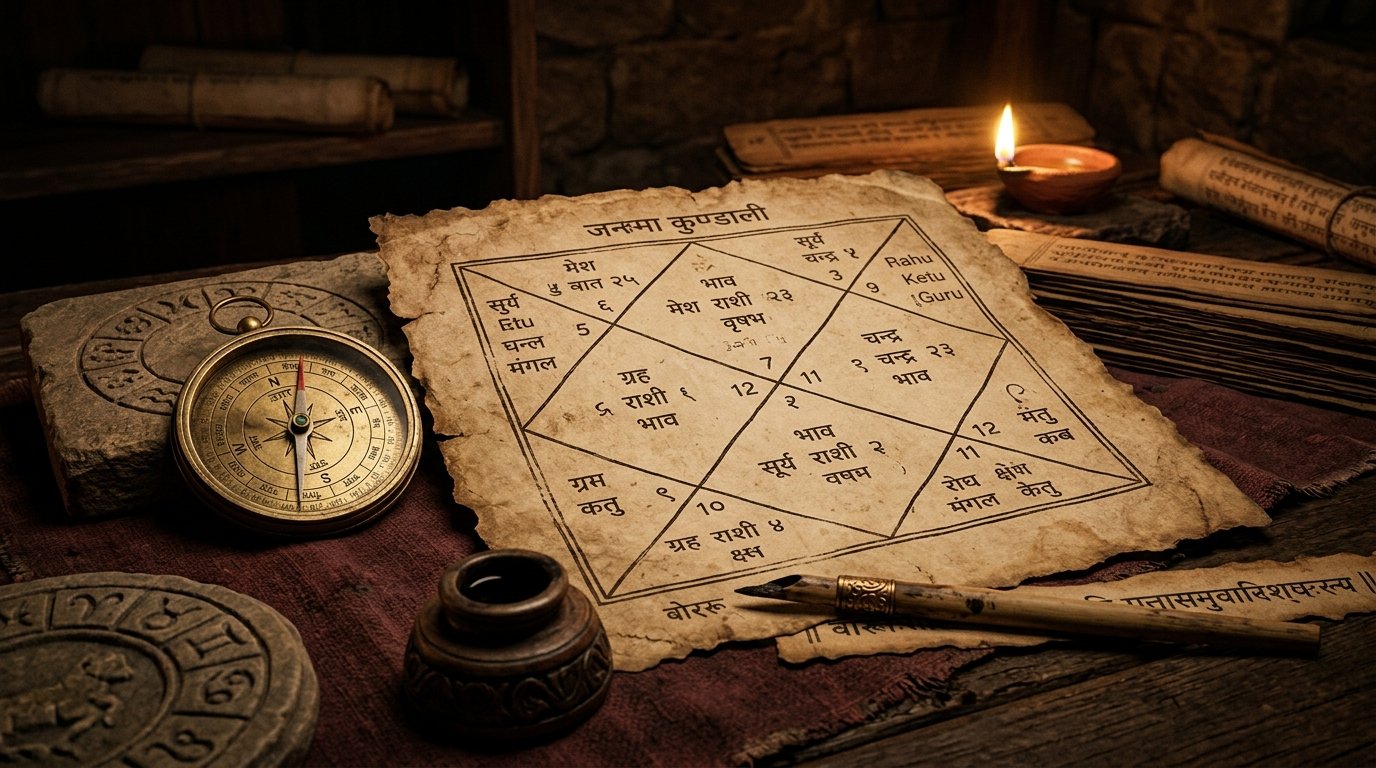
The Janam Kundli (natal birth chart) is an exact astronomical map of the heavens at the precise moment and geographic location of a person's birth. Far from being a fortune-telling tool, the horoscope is a profound blueprint of one's karmic tendencies, innate gifts, psychological inclinations, and life trajectories.
The Structure of the Vedic Horoscope
A Vedic chart comprises twelve distinct houses (Bhavas), nine planets (Grahas), and twelve zodiac signs (Rashis):
- Lagna (1st House): The physical body, constitution, personality, and foundational life approach.
- 2nd & 11th Houses: Wealth accumulation, family assets, speech, and gains.
- 4th House: Inner peace, emotional stability, mother, and domestic comfort.
- 7th House: Marriage, life partnerships, and public relationships.
- 9th & 10th Houses: Dharma, higher fortune, career achievements, and societal reputation.
Understanding Vimshottari Dasha Cycles
A unique contribution of Vedic Jyotish is the Dasha system, particularly the 120-year Vimshottari cycle. This system reveals when specific planetary potentials will ripen. An individual may possess an extraordinarily promising 10th house, but significant professional breakthroughs occur during the favorable dasha of a benefic planet.
The Purpose of Astrological Consultation
Consulting an experienced astrologer like Acharya Viki Joshi allows seekers to navigate life with foresight. By understanding upcoming planetary transits (such as Saturn's Sade Sati or Jupiter's transits) and current dasha influences, one can take timely, auspicious action and apply stabilizing spiritual remedies.